
Description
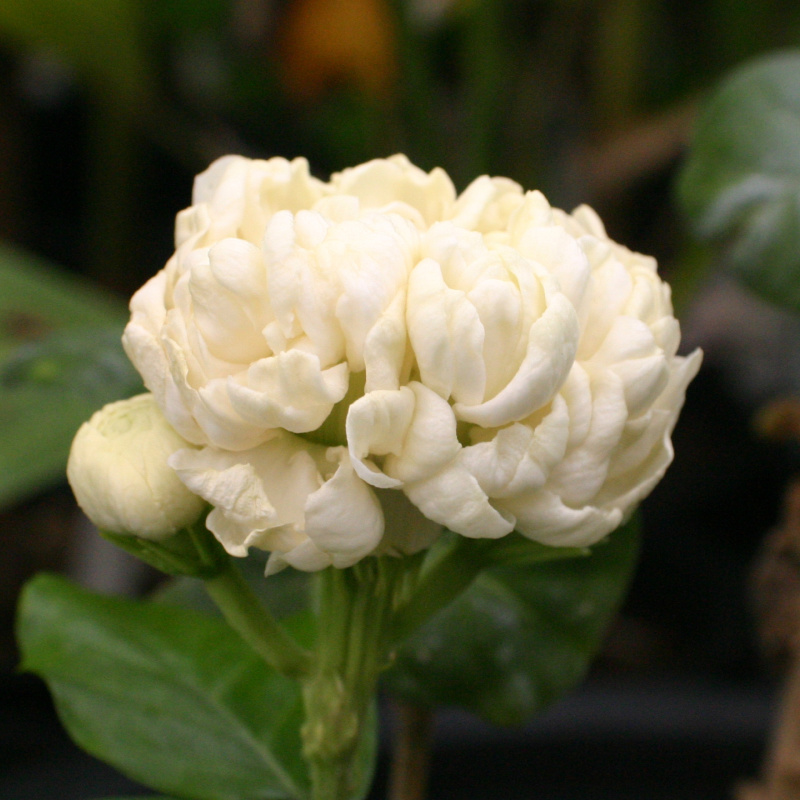
Jasminum sambac ‘Flore Plena’, also known as Emperor Jasmine, is a highly prized cultivar of Arabian jasmine known for its lush, double-layered white flowers and intensely sweet fragrance. Unlike the single-flowered forms, this variety produces full, rosette-like blooms that resemble miniature gardenias, making it especially popular for ornamental use, perfumery, and traditional floral garlands.
‘Flore Plena’ is a compact, evergreen shrub or scrambling vine that typically grows between 1–2 metres tall, depending on pruning and support. Its glossy, dark green leaves provide a striking contrast to the creamy-white double flowers. The blooms are usually smaller than single forms but far more layered, opening in tight clusters and releasing a rich, heady scent—particularly strong in the evening.
Flowering is most prolific in spring and summer, though in warm climates it may bloom intermittently year-round. The plant can be trained as a small shrub, hedge, or climber with support. Regular pinching or pruning encourages bushier growth and more flowering points.
Jasminum sambac has deep cultural importance across Asia. While the ‘Flore Plena’ cultivar is less commonly used for tea than single-flowered types, it is still valued for perfume extraction due to its rich fragrance, floral garlands and ceremonial use, and ornamental garden planting for scent and beauty. Its intoxicating aroma makes it a favourite for evening gardens and sensory landscapes.
- Common name.
Sambac Jasmine; Emperor Jasmine; ‘Flore Pleno’; Grand Duke of Tuscany
- Specifications.
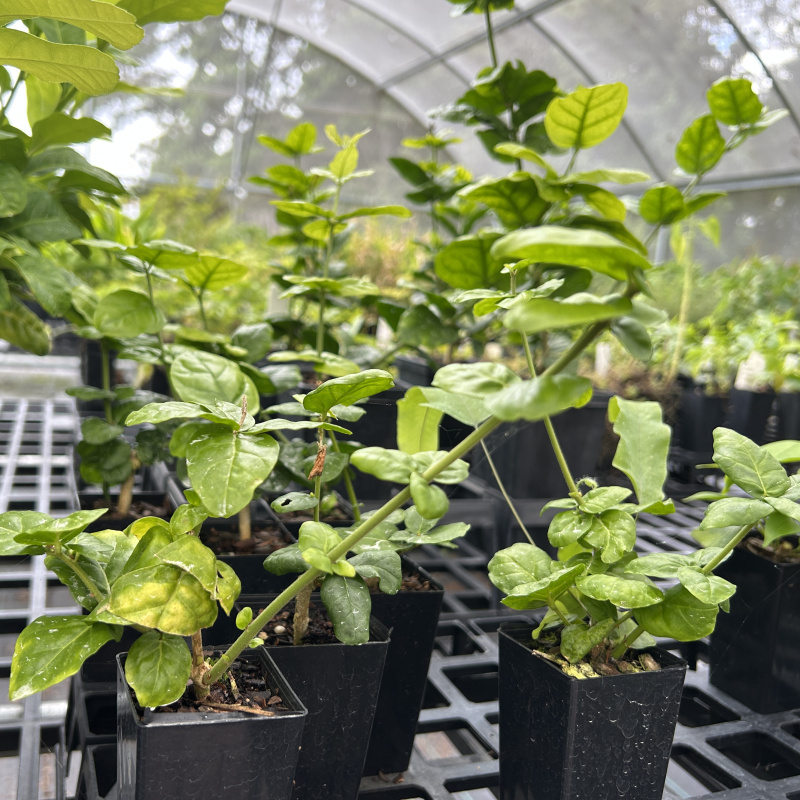
50mm Pot Size
Cutting Grown Plant
Ideal Growing Conditions.
Jasminum sambac thrives in warm, tropical to subtropical climates. It prefers well-drained, loamy soil with moderate organic matter. It grows best in full sunlight but can tolerate partial shade. Requires regular watering but avoids waterlogged conditions.
Pruning: Regular pinching or pruning encourages bushier growth and more flowering points. Light pruning after flowering helps maintain shape and promotes new growth. Remove dead or weak stems to improve airflow
Pests and Diseases: Jasminum sambac is generally hardy, but may occasionally be affected by pests like aphids, scale or spider mites. Treat infestations promptly with insecticidal soap, Eco Oil or Neem Oil
Soil: You need a high quality potting mix, not a pre-bagged product such as you find at Bunnings etc, try a landscaping place. However, as I am not local to you I still can’t say if they have good quality or not. You are looking for well composted pine bark and large particles. This ensures air flow to the roots and good drainage. When time to re-pot, select a pot one size up ONLY and ensure it has many holes for good drainage.
Fertiliser: We recommend and use Yates Nutricote Standard Black 270 Day Controlled Release Fertiliser however any good quality slow release fertiliser will do. We also stock an Australian Made liquid indoor fertiliser The Plant Runner Indoor Plant Food which is easy to use and odourless
We cannot send plants to Western Australia & Tasmania due to restrictions.
We strongly recommended to select Express Post shipping for all plant orders to minimise the transit time.
Other species that may interest you
Jasminum sambac (Arabian Jasmine) Plant
Tagetes lucida (Pericon; Mexican Tarragon) Plant
Interested in this product? Have a look at Koda Botanical’s Jasmine products
Organic Jasmine Pearl (Buddha Tears) White Tea
Arabian Jasmine 100% Pure Essential Oil 1ml
Jasmine 100% Pure Absolute Oil 1ml



Reviews
There are no reviews yet