
Description
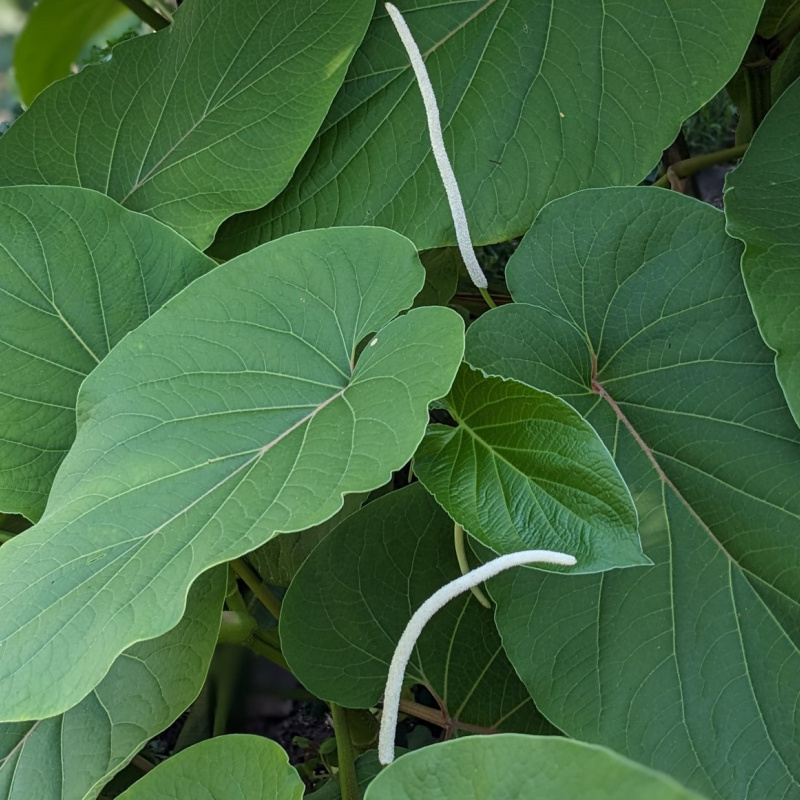
Piper auritum, known as Hoja Santa, is an evergreen shrub native to South America. A very vigorous plant that grows to a height of 5m with a spread of 2m. The stem is erect and branching with large, heart shaped, furry green and acuminate leaves. The flowers are whitish, occurring in short, axillary spikes and the fruit are numerous small drupes.
In indigenous cultures, hoja santa has been used in spiritual rituals and traditional practices, symbolizing purification and protection. Used for a variety of traditional medicinal purposes in Mexico, Central America and Colombia. The Chinatec in Oaxaca, Mexico brew the leaves to make an infusion that is given to women to facilitate childbirth or stimulate menstrual flow, and the leaf tea is also used as a digestive in Mexico.
Research suggests it may have antibacterial and antifungal properties which may help with indigestion and stomach ailments, and assist to alleviate symptoms of colds and respiratory issues.
The essential oil made from the leaves is very high in safrole, while the essential oil from the roots contains a complex mixture of obscure and unique allylbenzenes.
Culinary Use.
While it is generally safe for culinary use, the leaves contain safrole, a compound that is considered carcinogenic in high doses.
The leaves are often used to wrap tamales, fish, or meat for cooking, imparting a unique flavour. They are also added to stews and mole sauces. The aromatic leaves are used to flavour beverages, especially in traditional Mexican drinks. In some regions, it is used as a substitute for tarragon or anise in recipes.
- Common Name.
Mexican Pepperleaf; Rootbeer Plant; Earred Pepper; Sacred Pepper; False Kava.
- Specifications.
50mm Pot Size
Cutting Grown Plant
Ideal Growing Conditions.
Piper auritum prefers rich, moist, well-composted soils in a protected, partially shaded position. It is drought and frost tender.
Pruning: Trim back any leggy or dead growth to encourage bushier growth. In frost-free climates, Piper auritum can grow quite vigorously and may require periodic pruning to keep it manageable. Regular trimming encourages lush, productive growth and an attractive, dense habit.
Pests and Diseases: Monitor your plant for pests like mealybugs, scale, aphids or spider mites. Piper auritum is generally a hardy plant with relatively few serious pest problems, especially when grown in warm, humid conditions. Treat infestations promptly with insecticidal soap, Eco Oil or Neem Oil
Soil: You need a high quality potting mix, not a pre-bagged product such as you find at Bunnings etc, try a landscaping place. However, as I am not local to you I still can’t say if they have good quality or not. You are looking for well composted pine bark and large particles. This ensures air flow to the roots and good drainage.
We recommend Yates Nutricote Standard Black 270 Day for a fertiliser, which can be found in our store, however any good quality slow release fertiliser will do. When time to re-pot, select a pot one size up ONLY and ensure it has many holes for good drainage.
Fertiliser:
Yates Nutricote Standard Black 270 Day Controlled Release Fertiliser
The Plant Runner Indoor Plant Food
We cannot send plants to Western Australia & Tasmania due to restrictions.
We strongly recommended to select Express Post shipping for all plant orders to minimise the transit time.
Interested in this Piper’s? Have a look at these products
Piper methysticum ‘Somoan’ (Kava) Plant
Piper nigrum (Black Pepper) Plant
Piper betle (Betel Leaf) Plant


Reviews
There are no reviews yet