
Description
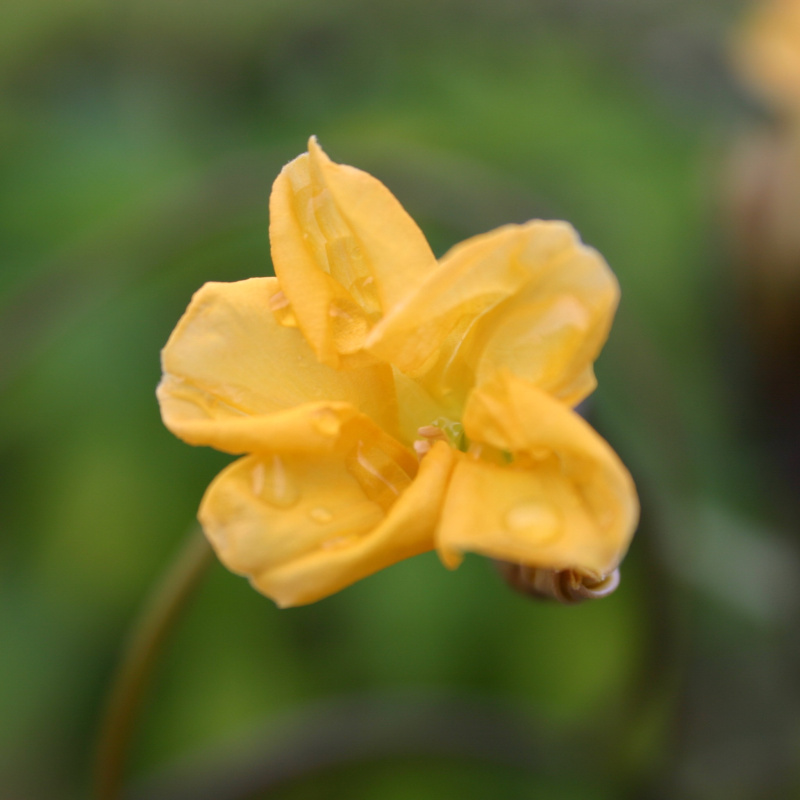
Distimake tuberosus (syn. Merremia tuberosa), commonly known as Wood Rose or Hawaiian Wood Rose, is a vigorous tropical climbing vine belonging to the morning glory family (Convolvulaceae). Native to Central and South America, it has become widely naturalised throughout tropical and subtropical regions of the world, where it is admired for its rapid growth, attractive flowers, and distinctive seed pods.
The plant produces large, bright yellow, funnel-shaped flowers that attract bees, butterflies, and other pollinators. Following flowering, it develops unique woody seed capsules surrounded by enlarged sepals, creating the ornamental “wood roses” that are often used in floral arrangements, craftwork, and decorative displays.
Distimake tuberosus grows from a substantial underground tuber that stores water and nutrients, allowing the vine to withstand periods of drought and quickly regenerate after adverse conditions. In suitable climates it can cover fences, trellises, and trees with dense foliage and seasonal floral displays.
Traditionally, various parts of the plant have been utilised in folk medicine throughout its native range, although its primary modern appeal lies in its ornamental value. The species thrives in full sun to partial shade and prefers well-drained soils. Due to its vigorous growth habit, it is best provided with ample space and support structures where it can be managed effectively.
Highly prized by collectors of unusual tropical plants, Distimake tuberosus combines striking yellow flowers, rapid growth, and the famous decorative wood rose seed pods that have made it a popular ornamental species around the world.
Common Name: Spanish Arborvine; Yellow Morning-Glory; Regretvine.
Botanical Synonym: Merremia tuberosa; Ipomoea tuberosa; Operculina tuberosa.
Germination Tips: Distimake tuberosus seed requires scarification to germinate. The seed of the large woodrose must be nicked well before it will grow. Cut a nick in the seedcoat with a hacksaw, or cut the small end of the seed off. Soak for 24 hours or until it swells. Once swollen, place the seed in a bowl or cup of damp peat moss, cover it with plastic wrap, and put it over the pilot light of your stove, or anywhere that maintains a temperature of 80 degrees Fahrenheit or more. Ordinary bottom heat usually isn’t warm enough.
Check every few days until it sprouts in 3 to 10 days. Once sprouted, plant in a 3- to 4 inch pot if grown indoors, or start seed in May if to be grown outdoors. Place the pot in a large sunny window and give the vine something to twine around. It is very easy to grow after sprouting. The vine will flower the second and subsequent years.
We cannot send this species to Western Australia due to restrictions.
Our Guarantee
We personally count every seed packet to ensure it contains at least the specified number of seeds. However, mistakes can happen, so please reach out if you notice any inconsistencies.
These seeds are believed to meet the standard viability percentage for their species, sourced either from our own SAB nursery or from reputable, trusted breeders.
Do not hesitate to contact us for up-to-date germination rates or for a germination test to be conducted.
Interested in this species? Have a look at these
Duboisia hopwoodii (Pituri) Plant
Artline 780 Garden Marker Water Resistant/Quick Dry Pen Black
Desmodium gyrans (Telegraph Plant) Plant


Reviews
There are no reviews yet